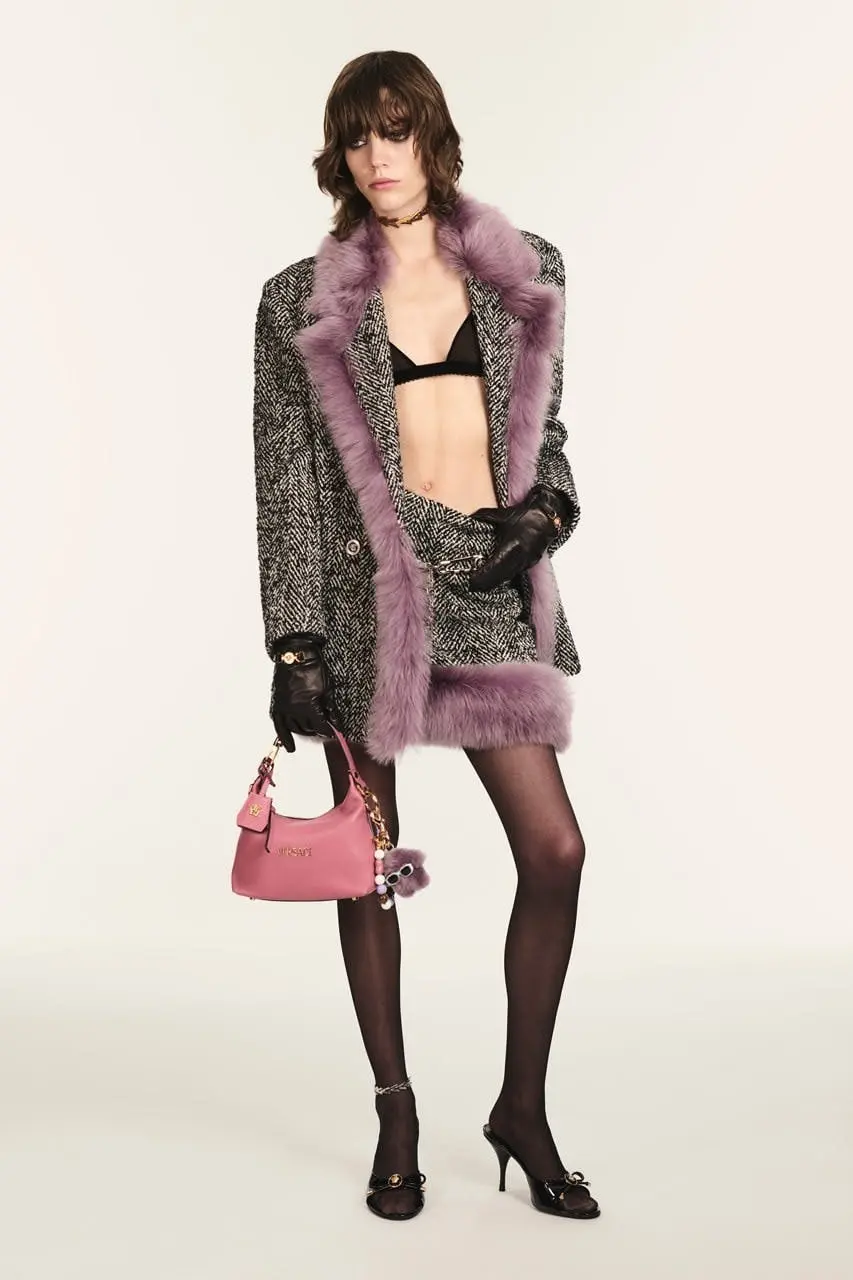
The Maverick of Givenchy: Alexander McQueen’s Provocative Transformation
In 1996, Alexander McQueen—the "enfant terrible" of British fashion—was appointed Creative Director of the storied French house of Givenchy. It was a cultural collision of seismic proportions. McQueen, the East End iconoclast, was stepping into the headquarters of a house defined by the refined elegance of Hubert de Givenchy and Audrey Hepburn.
McQueen’s tenure at Givenchy was famously tempestuous. He was a designer who prioritized emotional provocation over commercial safety. While the French establishment was initially skeptical of his gritty, sometimes dark aesthetic, McQueen proved that he could master the technical rigors of haute couture while infusing it with his own raw, avant-garde vision.
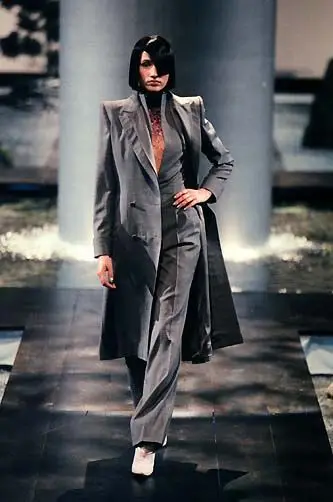
Alexander McQueen: Bringing subversion to the house of Givenchy.
The Collection of the Decade: Spring/Summer 1999
Perhaps his most iconic moment at the house occurred during the Spring/Summer 1999 ready-to-wear show. Paralympic athlete Aimee Mullins walked the runway on intricate, hand-carved wooden prosthetic legs, followed by a finale that saw model Shalom Harlow spray-painted by two industrial robots. It was performance art as much as it was fashion, challenging the industry’s perception of beauty and disability.
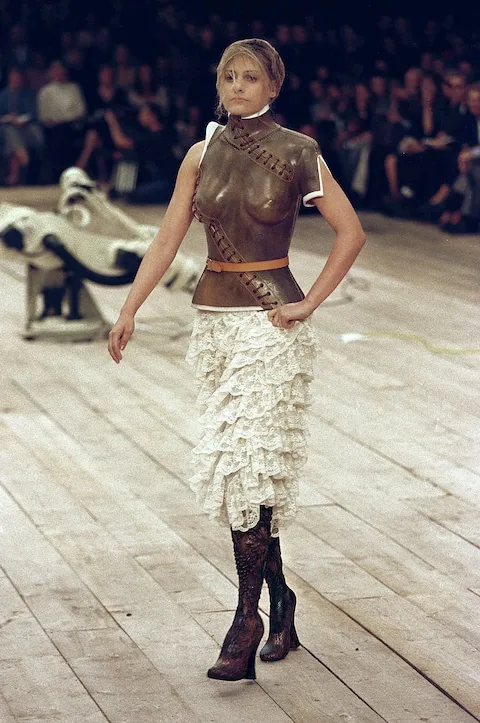
The iconic carved wooden legs for Aimee Mullins.
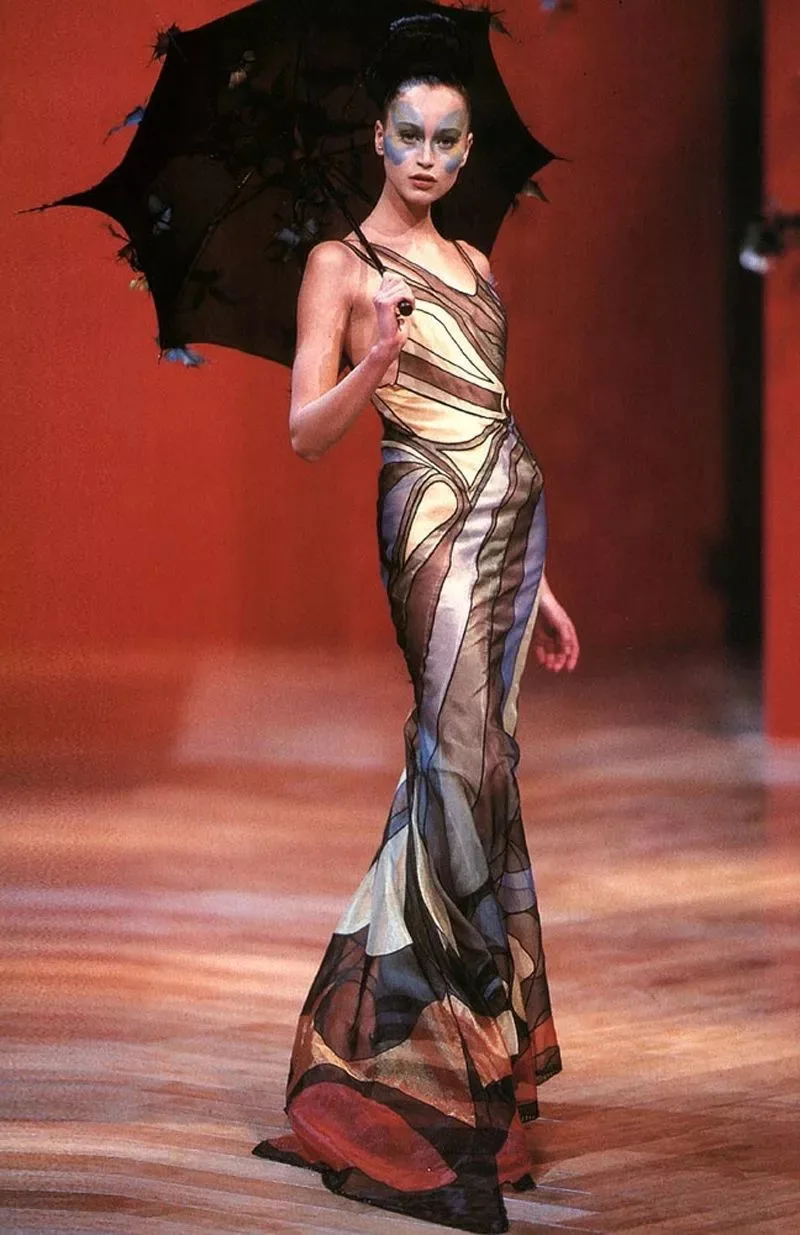
A study in dark, structural elegance.
The business of Givenchy flourished under his watch. In 1996, the house was a relatively small player in the LVMH portfolio. By 2001, it was a multi-billion dollar brand with over $1 billion in annual sales. McQueen proved that a provocative, avant-garde aesthetic could be a commercial juggernaut.
The Legacy for SAINT DLOVE
At SAINT DLOVE, McQueen's influence is evident in our commitment to emotional provocation. We admire his ability to push the boundaries of what a fashion show could be. His ability to blend historical references with a strong sense of purpose is a key inspiration for our own design process. McQueen taught us that fashion is a language of ideas.
"Fashion is a language that creates itself in clothes to interpret reality." — Alexander McQueen
Today, the house of Givenchy stands as a monument to Alexander McQueen's genius. He taught us that a designer's role is not just to create beautiful things, but to be the architect of a world that people want to inhabit.